Socialising
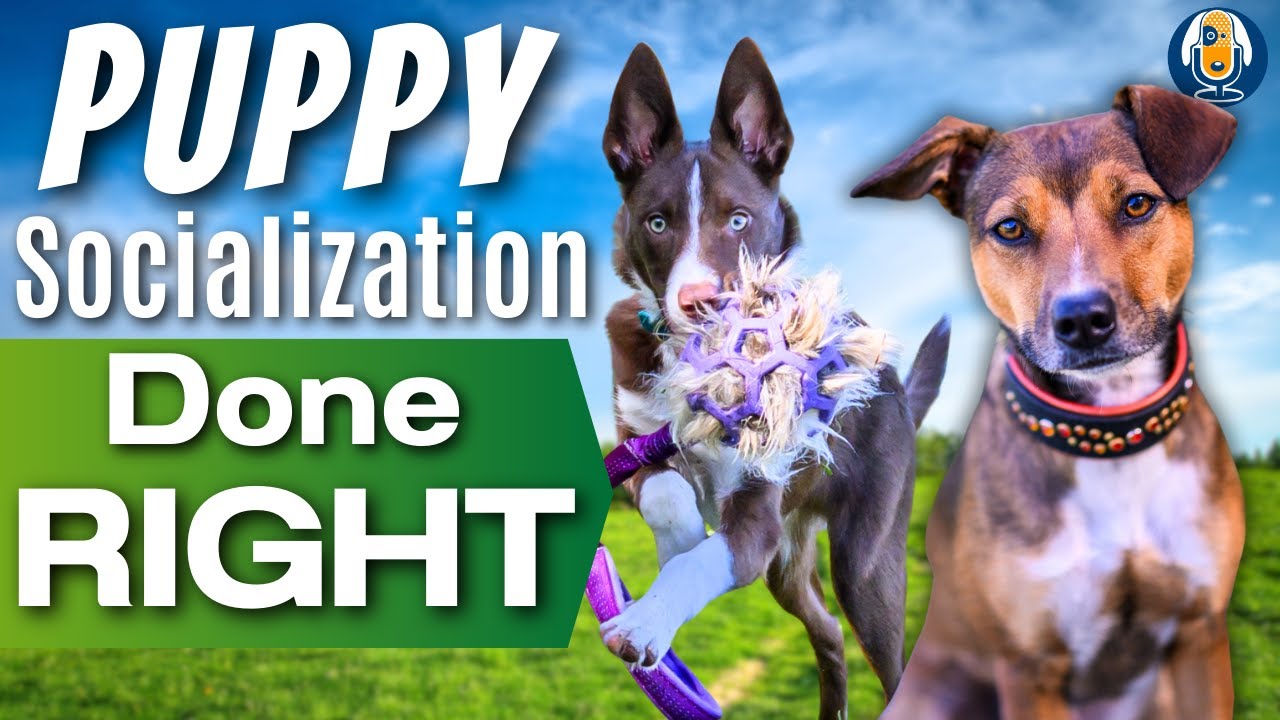
Socialisation teaches our dogs how to interact appropriately with the world.
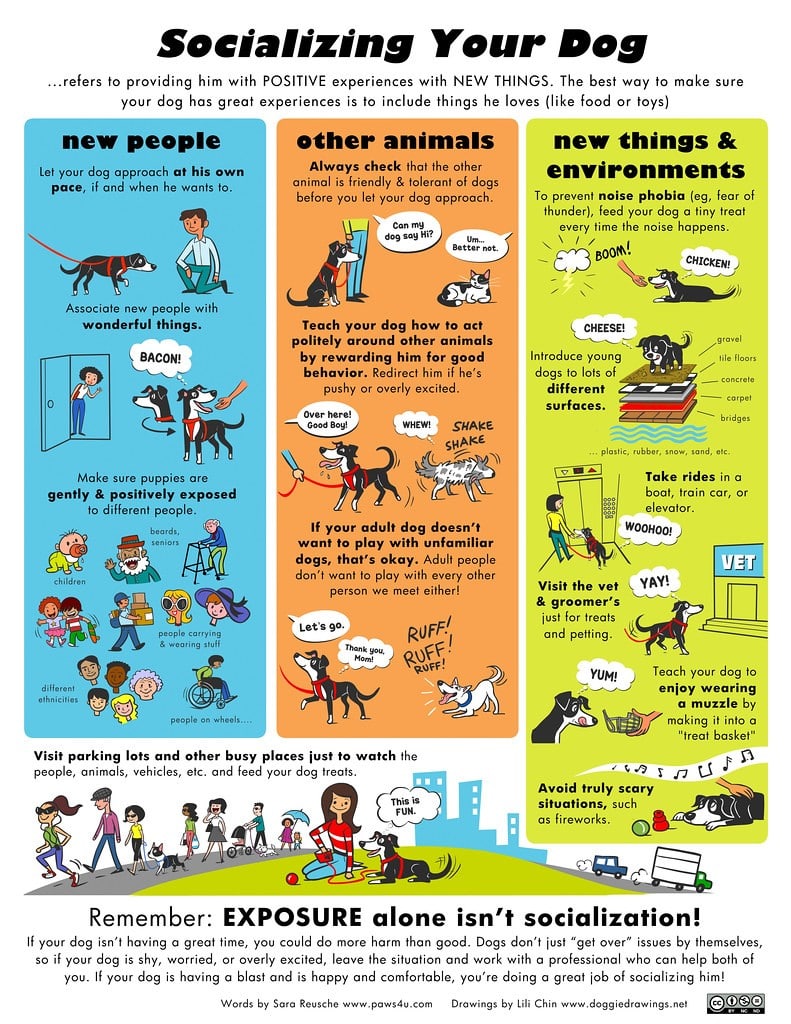
Socialising involves behaving in a manner that is acceptable by society, and lerning how to interact and mix with others.
Why:
A well-socialised dog is less likely to react poorly in new situations. They are easier to take places and are often welcomed by other people and animals. Good socialisation also reduces the chances of Trigger stacking, by reducing the amount of things that trigger the dog.
When:
Socialising starts as early as 0 – 8 weeks old. This time is usually spent with the mother and siblings, and good reputable breeders will start exposing their puppies to a wide range of stimuli to help them get the best start in life.
When a puppy comes into their new home, the first 8-16 weeks are a critical socialising period, where the young pup is eager to learn and understand their new world and everything in it. This time can sometimes also coincide with a puppy's first Fear period.
Socialisation doesn't end there. It should continue throughout your dog’s life to ensure the triggers retain a positive association.
When a puppy comes into their new home, the first 8-16 weeks are a critical socialising period, where the young pup is eager to learn and understand their new world and everything in it. This time can sometimes also coincide with a puppy's first Fear period.
Socialisation doesn't end there. It should continue throughout your dog’s life to ensure the triggers retain a positive association.
How:
To socialise a dog, expose them to a trigger such as those listed below and teach them what you would like them to do when they encounter it again. The next time they experience the same trigger or something similar, mark and reward the dog for doing what you taught them to do the first time.
For example, when encountering the postman, you can teach your dog to sit quietly and observe them, or to ignore them, and go sniff in the opposite direction. Every time they see the postman, reward the dog for sitting and watching them or ignoring them to sniff something else.
Allow your dog to take their time and watch triggers from a safe distance. Reward curiosity and calm behaviour towards new and unusual objects, and reward and praise your dog to build a positive association.
If your dog shows fear or barks and growls, DO NOT SHOUT OR PUNISH THEM. This will make it worse. Instead, increase the distance, and when they are far enough to remain calm, reward them for observing the trigger and spend some time building a positive association towards the trigger. When your dog is more relaxed, approach the stimulus slowly at your dog's pace. You can also use shaping, desensitisation and counterconditioning to help your dog. You cannot increase your dog's fear by rewarding it.
Patience is the key. Five extra minutes of patience at the start will save you hours of coaxing later. Understanding conditioning and desensitisation is essential when socialising your dog.
For example, when encountering the postman, you can teach your dog to sit quietly and observe them, or to ignore them, and go sniff in the opposite direction. Every time they see the postman, reward the dog for sitting and watching them or ignoring them to sniff something else.
Allow your dog to take their time and watch triggers from a safe distance. Reward curiosity and calm behaviour towards new and unusual objects, and reward and praise your dog to build a positive association.
If your dog shows fear or barks and growls, DO NOT SHOUT OR PUNISH THEM. This will make it worse. Instead, increase the distance, and when they are far enough to remain calm, reward them for observing the trigger and spend some time building a positive association towards the trigger. When your dog is more relaxed, approach the stimulus slowly at your dog's pace. You can also use shaping, desensitisation and counterconditioning to help your dog. You cannot increase your dog's fear by rewarding it.
Patience is the key. Five extra minutes of patience at the start will save you hours of coaxing later. Understanding conditioning and desensitisation is essential when socialising your dog.
Socialising Checklist
This list is simply a guide. You should always exercise caution to ensure you / your dogs, and the public are safe during any exercise. It is advised to have your dog on a lead or in control during socialising.
People
- All genders
- All ages (babies, toddlers, kids, teenagers, adults, elderly)
- Wearing fluoro, uniforms, police, firefighters, and wearing overcoats
- Moving (Walking, running, playing)
- Sitting, sleeping
- Dressed in hats, costumes, and sunglasses
- Using walking canes, crutches and umbrellas
- Different ethnicities
- Beards/bald/long & short hair
- Loudly talking, laughing, shouting
- Having picnics or sitting on the ground
- Playing with toys and balls
- People who move unusually, as if they are drunk, old or injured.
- People moving using mobility aids such as wheelchairs or easy riders.
- Prams, tricycles
- Pushing shopping trolleys
Animals and animal sounds
- Cats
- Dogs of all ages (Puppy adolescents, adults, elderly)
- Dogs of all sizes (Toy dogs, medium, large, giant breeds)
- Birds
- Rabbits
- Rodents, guinea pigs.
- Poultry
- Domestic animals like Horses, llamas, cows, deer, sheep, goats, and pigs
- Wild animals
Noises
- Doorbell, knocking, door slams, door clicks.
- Musical instruments
- Other dogs barking
- Squeaking toys
- Paper crinkle
- Metal gate clicks and slams
- Sirens
- Fireworks, thunder, loud bangs
- Car horns
- Rain, storm, strong wind
- Whistles, wind chimes
- TV / radio / music
- Cars backfire / loud exhausts / screeching tyres / revving engines
- Trucks/trains/ aeroplanes
- Bicycle bells
- Motorcycles
- Household items such as vacuum cleaners / lawnmowers / microwave / dishwashers / fridge compressors / fans / ACs / Hair dryers
- Garbage truck
- Courier deliveries
- Parties / at home and next door
- People and animals' sounds, on the other side of the fence.
- Road crossing noises
Toys
- Hard chew toys
- Soft plush toys
- Stringy or soft tug toys
- Noisy toys
- Drones and RC toys
- Toys that are not theirs
Environments
- Water (Pools, lakes, rivers, ocean)
- Sandpits
- Beach, river, lakes, hills
- Parks/children's playgrounds
- Grass fake & real
- Walking surfaces (Tile, concrete, bitumen, carpet, laminate, wood, gravel, mud, puddles, etc)
- Vets, Groomers, daycares, boarding kennels
- Shops (Bunnings, Petbarn, etc)
- Dog-friendly cafes and restaurants
- Indoor & outdoor venues
- Schools
- Cars, buses, trains, boats.
- Stairs, lifts (Not Escalators)
- Dog Tunnels or similar confined spaces
- Footbridges
- Busy roads
- Crates
Handling
- Being checked all over by familiar people and strangers. (nose, ears, feet, tail, muzzle, gums, thigh, leg pits, paws, etc)
- Collar holds/ lead clicks
- Walking, sitting, resting while on a lead
- Being groomed (different brushes, clippers, hair dryers, nail clippers, scissors, etc.)
- Bath time
- Clipping nails / checking paws / cleaning eyes & ears
- Being dried with a towel and a hair dryer
- Being bandaged
- Being restrained by other people.
- Standing on a table or lying down with a human examining
- Teeth brushing/checking
- Wearing a harness
- Wearing a muzzle
Objects
- Shoes, socks, other clothes
- Balloons, bubbles, beach balls
- Bicycles, skateboards, scooters, segways
- Drones, RC cars
- Flags, sprinklers, garden hoses
- Basketballs, footballs, footy balls, tennis balls*, cricket balls*, ping pong balls*, small bouncy balls. (*Do not allow mouthing or swallowing can cause choking)
- Garage doors
Great links
You can download a printable copy of this socialising checklist here. LINK
More lists available, please click below.
Walkerville Vet,
Louisiana SPCA,
Whole Dog Journal,
Puppy Tails
Pupford
Great videos from other trainers
More resources:
Stolzlechner L, Bonorand A, Riemer S. Optimising Puppy Socialisation-Short- and Long-Term Effects of a Training Programme during the Early Socialisation Period. Animals (Basel). 2022 Nov 8;12(22):3067. doi: 10.3390/ani12223067. PMID: 36428295; PMCID: PMC9687081.
McEvoy V, Espinosa UB, Crump A, Arnott G. Canine Socialisation: A Narrative Systematic Review. Animals (Basel). 2022 Oct 22;12(21):2895. doi: 10.3390/ani12212895. Erratum in: Animals (Basel). 2022 Dec 26;13(1):81. doi: 10.3390/ani13010081. PMID: 36359020; PMCID: PMC9655304.
The Veterinary Nurse - Early training and the impact of fear, by Kelly Huitson. 02 February 2024